Young Explorers Activity Book: A Creative Toolkit for Early Learning
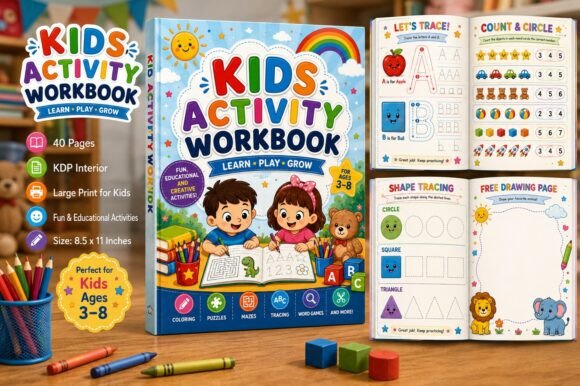
For designers, content creators, and small business owners working within the family, education, or lifestyle sectors, finding assets that are both high-quality and genuinely engaging is a constant challenge. The Young Explorers Activity Book represents a specific category of design asset that bridges the gap between entertainment and education. It is not merely a collection of coloring pages; it is a structured system designed to facilitate early learning through play, targeting the critical developmental window of children aged 4 to 8.
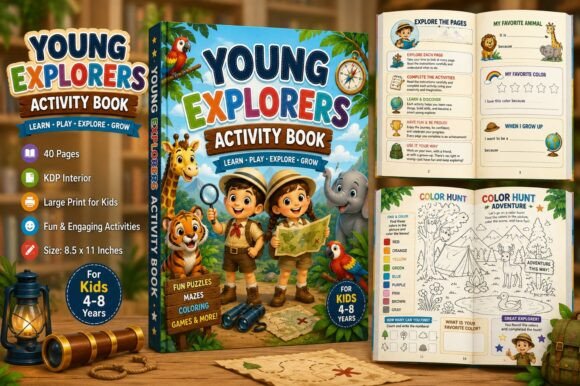
Understanding the composition of this activity book is essential for anyone looking to utilize it as a product or a brand asset. The visual language is intentionally crafted to be inviting and stimulating without being overwhelming. The personality of the book is one of curiosity and wonder, utilizing bold outlines for easy coloring and clear typography for tracing exercises. The style leans towards a friendly, approachable aesthetic that appeals to both children and the parents who purchase educational materials. This balance is crucial for commercial viability, as the visual hierarchy must guide a child’s hand while maintaining a professional standard that parents expect from premium font and activity resources.
Visual Characteristics and Design Personality
The core appeal of the Young Explorers Activity Book lies in its thematic consistency. The content is divided into adventure themes—safari, ocean, and dinosaur—which allows for a varied yet cohesive visual experience. From a design perspective, this is a masterclass in editorial design for a young audience. The illustrations are not just static images; they are interactive environments. The "treasure hunts" and "matching games" require spatial awareness and problem-solving, meaning the layout must be intuitive. The typeface used for instructions is likely a legible sans serif font or a friendly handwritten font to mimic the natural flow of early writing, ensuring that the readability is optimized for developing eyes.
For the creator or entrepreneur, this activity book serves as a case study in brand identity for the children's market. The visual characteristics—vibrant potential for color application, structured spaces for tracing, and open areas for creative drawing—demonstrate how to balance structure with freedom. This is a common requirement in packaging design and social media graphics aimed at parents. The book’s design encourages engagement, a metric that is just as important in print media as it is in digital marketing.
Strategic Applications for Professionals
While the primary user is a child, the primary buyer is an adult. This dynamic is vital for marketers and publishers. The Young Explorers Activity Book can be utilized in several strategic ways beyond a standalone product:
- Brand Building: For businesses in the childcare or educational toy niche, offering a free download or a physical copy of this activity book can serve as a high-value lead magnet. It establishes authority and provides immediate utility to the target audience.
- Content Marketing: Bloggers and content creators can use the themes within the book—such as the dinosaur adventures or ocean explorations—to create companion content. This creates an ecosystem around the product, driving traffic and engagement.
- Event Planning: For crafters and event planners, the PDF files (formatted at 8.5x11 inches) are print-ready. They can be used as party favors, placemats for family-friendly restaurant branding, or educational tools in waiting rooms.
The versatility of the 40-page collection allows for segmentation. A marketing campaign might focus on the alphabet tracing pages for parents of four-year-olds, while a different campaign highlights the puzzles and logic games for the older end of the demographic. This ability to target specific pain points—such as keeping children entertained during travel or supporting homeschooling curriculums—adds significant commercial value.
Evaluating Fit and Technical Specifications
When integrating assets like the Young Explorers Activity Book into a broader project or product line, technical specifications matter. The files are provided as high-quality, ready-to-upload PDFs. This standardization ensures consistency across print runs, which is a cornerstone of professional graphic design. The 8.5x11-inch format is the industry standard for North American printing, ensuring compatibility with home printers and professional print shops alike.
For those concerned with font pairing and typography in their own branding efforts, observe how the activity book handles text. Effective educational materials often pair a decorative display font for headers (like the adventure titles) with a highly legible serif font or sans serif font for body text. If you are creating marketing materials to sell this book, you should adopt a similar strategy. Use a modern typography approach that feels fresh but trustworthy. Avoid overly complex script font styles for instructional text, as this hinders the learning process and reduces the perceived value of the educational content.
Practical Guidance for Implementation
For the entrepreneur or small business owner, the decision to use a resource like the Young Explorers Activity Book should be based on audience alignment. Does your audience consist of parents seeking screen-free entertainment? Are they educators looking for supplementary materials? The book’s strength lies in its ability to build confidence and focus—emotional benefits that should be central to your messaging.
When testing the asset, print a few pages to assess the paper weight compatibility and ink absorption. While the digital file is high-resolution, the tactile experience of the physical product influences customer satisfaction. Furthermore, ensure that any commercial use complies with the licensing terms. Whether you are using the book as a digital download on a marketplace or incorporating the activities into a paid workshop, understanding the commercial font and asset licensing is non-negotiable for maintaining professionalism and avoiding legal pitfalls.
Ultimately, the Young Explorers Activity Book is more than a distraction; it is a developmental tool. Its design supports the acquisition of fine motor skills and cognitive abilities through creative challenges. By leveraging its structured yet playful approach to learning, professionals can offer tangible value to their clients and customers, fostering a brand perception that is both caring and competent.